
The short answer
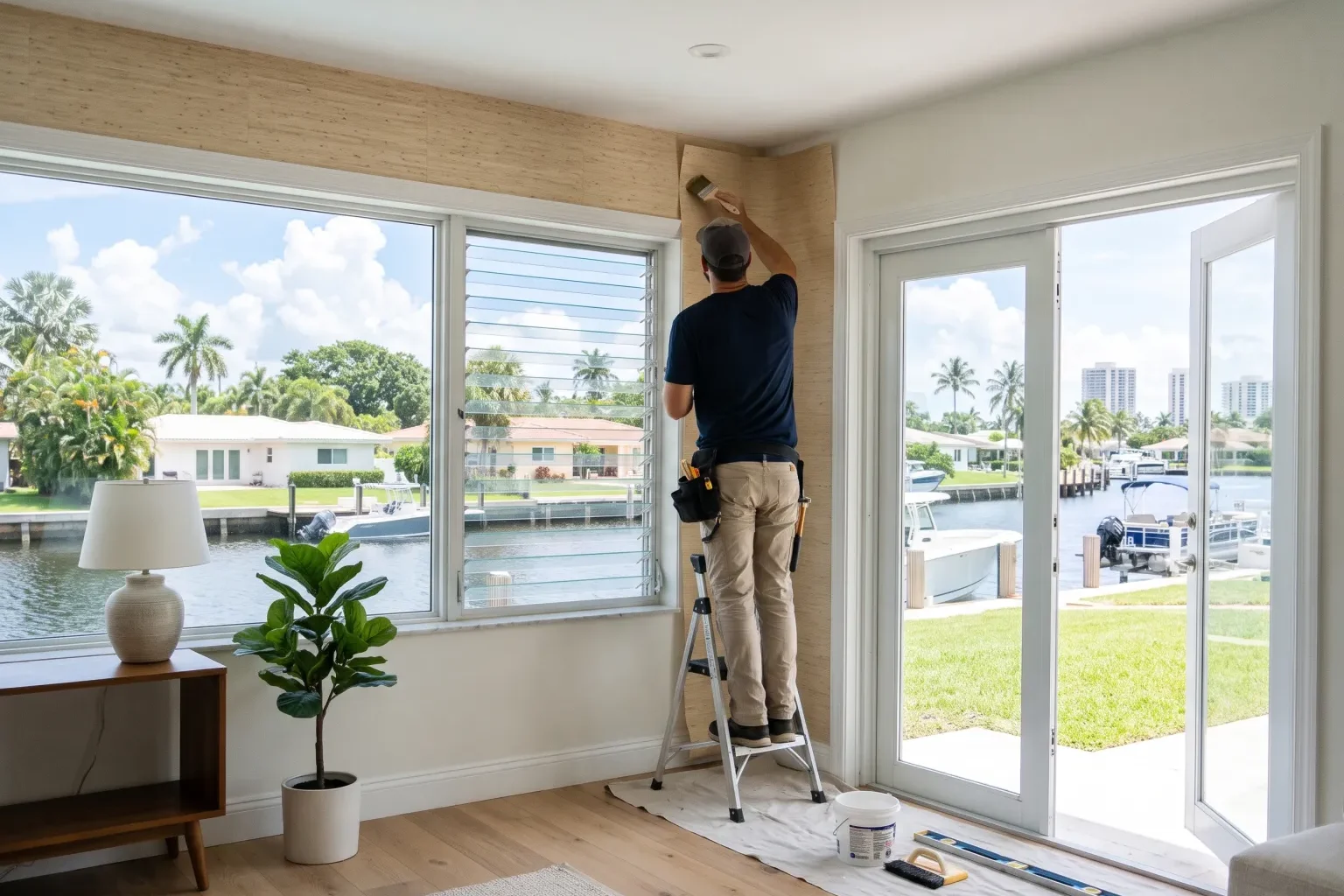
Grasscloth works best in dry, low-traffic rooms such as living rooms, dens, bedrooms and offices, not in bathrooms or near a pool door. We seal and prime the wall with a pigmented acrylic primer, hang panels in sequence with reversed or straight orientation as the maker specifies, and keep paste off the face. Visible seams are normal for natural fiber; careful sequencing keeps them calm.
Grasscloth is woven from natural fibers such as sisal, jute, seagrass, arrowroot and hemp, then laminated onto a paper backing. No two strands take dye the same way, so every panel carries its own shading. That handmade character is the reason people fall for it, and it is also the reason grasscloth punishes a rushed hang. PrimeWall Interior Solutions installs grasscloth for homeowners across Fort Lauderdale and the surrounding Broward communities, and this page explains how we decide whether a room suits it, what we do to the wall first, how the panels go up, which factors shape the size of the job, and what living with a fiber wall involves in a climate where the air conditioner rarely gets a day off.
Rooms where natural fiber makes sense
Grasscloth adds texture you can feel and a soft, matte depth that flat papers cannot copy. It quiets a room visually and slightly absorbs sound, which is why we often suggest it for a primary bedroom, a study, a dining room wall behind a sideboard, or the long wall of a living room in a concrete-block house where everything else is hard and bright.
It is a poor match for spaces with splashing water, steam, or constant hand contact. Fibers soak up moisture and stain from oils, so a guest bath, a kitchen backsplash zone, a mudroom by the garage, or a hallway that kids run their fingers along will age fast. In waterfront condos where sliders stay open on breezy days, we also look at how much salt air reaches the wall before recommending a natural product over a vinyl look-alike.
- Good fits: bedrooms, offices, formal dining rooms, media rooms, ceilings and recessed niches
- Use caution: entryways, stair runs and rooms with pets that scratch
- Usually avoid: full bathrooms, laundry rooms, kitchens and walls beside exterior doors
Getting the wall ready for a woven paper
Fiber panels are thin enough that they telegraph whatever sits underneath. A patch line, a nail pop or a ridge of old texture will show through as a shadow once raking light from a window hits it. We start by checking the surface with a work light held flat to the wall, then fill, sand and spot-prime anything that would read through.
Color under the paper matters more than people expect. Many grasscloths are loosely woven, so tiny gaps let the wall color peek through. We roll a pigmented acrylic wallcovering primer tinted close to the background of the paper, which hides contrast and gives the paste a uniform grip. On walls that were painted with a glossy enamel, we degloss first so the primer bonds instead of sliding.
South Florida walls also hold moisture. A block exterior wall behind drywall can run cooler and damper than an interior partition, especially through the wet months from May to October. We take a moisture reading before priming, and if a wall is wet because of a roof or window leak, we flag it so the source gets fixed before any paper goes up.
How we hang grasscloth, step by step
Measuring comes first. We note wall widths, ceiling height, windows and doors, then compare against the roll width and the manufacturer's instructions. Because shading varies between production runs, every roll for one room must share the same run number, and we order a little extra so a mismatched panel can be set aside instead of forced onto a focal wall.
Next we lay out the room on paper. Grasscloth has no printed pattern to match, so the plan is about shade sequence. We unroll each panel, number it, and decide where the darkest and lightest strips should land. Some makers call for reversing every other panel top to bottom to soften the difference at each seam; others want straight hanging. We follow the label on that specific product.
Paste goes on the back with a clear, heavy-duty adhesive, and the panel is booked, folded paste side to paste side, for the time the maker lists. Booking lets the backing relax so it does not shrink after it meets the wall. We keep paste off the fiber face entirely, since a smear dries as a dark spot that cannot be washed out.
Seams are butted, never overlapped, and pressed with a soft roller rather than a hard seam roller that could crush the weave. We trim at the ceiling and baseboard with a fresh blade on every cut, using a wide taping knife as a straightedge, and we cut around outlets and switches after hanging so plates sit flat. A final inspection under side light catches lifted edges before we pack up.
- Measure walls and confirm a single run number on every roll
- Unroll, number and sequence panels for even shading
- Paste the backing only, book, then hang plumb from a laser line
- Butt seams and press gently with a soft roller
- Trim with fresh blades and reset cover plates
What changes the scope of a grasscloth job
We do not list figures here, because each room is different, but we can tell you what moves the effort up or down. Wall condition is the largest variable: a smooth, sound wall needs only primer, while a wall with heavy orange peel or old adhesive residue needs skim coating first. The product itself matters too, since fine paper weaves are more delicate to handle than coarse sisal, and some imported grasscloths arrive with narrower widths that mean more seams.
Room size and ceiling height change how many panels we hang and whether we need scaffolding or a taller ladder. A two-story foyer, a vaulted living room or a stairwell takes longer than a bedroom with a standard ceiling. Cutouts for windows, built-ins and arches add time as well. Even though grasscloth has no printed repeat, any paper-backed accent border or companion print in the same room may carry a pattern repeat that adds waste.
Living with grasscloth in a humid climate
Keep the air conditioning steady. Big swings in humidity, such as shutting the unit off for weeks while you travel during summer, make fibers swell and relax, which can open seams. A consistent indoor setting is the best thing you can do for the wall.
Dust with a soft brush attachment on a vacuum or a dry microfiber cloth, working downward. Do not scrub with water. If something splashes, blot it straight away with a clean, dry towel; rubbing spreads the stain into the weave. Direct afternoon sun through west-facing glass will fade natural dyes over time, so sheer curtains or UV film on the window help preserve the color.
Before a storm, if you are putting up shutters or moving furniture away from windows, keep sharp corners off the paper. Small snags in the weave can usually be pressed back with a dab of adhesive, and we are happy to look at any panel that lifts.
Grasscloth Wallpaper Installation by city
- Grasscloth Wallpaper Installation in Lauderdale-by-the-SeaLocal service & repairs
- Grasscloth Wallpaper Installation in Oakland ParkLocal service & repairs
- Grasscloth Wallpaper Installation in Wilton ManorsLocal service & repairs
- Grasscloth Wallpaper Installation in Pompano BeachLocal service & repairs
- Grasscloth Wallpaper Installation in Lauderdale LakesLocal service & repairs
- Grasscloth Wallpaper Installation in Lighthouse PointLocal service & repairs
- Grasscloth Wallpaper Installation in North LauderdaleLocal service & repairs
- Grasscloth Wallpaper Installation in Hillsboro BeachLocal service & repairs
- Grasscloth Wallpaper Installation in LauderhillLocal service & repairs
- Grasscloth Wallpaper Installation in MargateLocal service & repairs
- Grasscloth Wallpaper Installation in Coconut CreekLocal service & repairs
- Grasscloth Wallpaper Installation in Deerfield BeachLocal service & repairs