
The short answer
Grasscloth can work very well in Lighthouse Point if it goes on interior walls kept stable by air conditioning, over a smooth primed surface, with rolls sorted and reversed by hand. Expect visible seams and natural shade variation; that is part of the material.
Grasscloth brings woven sisal, jute, hemp or seagrass onto a wall, and that relaxed, natural texture fits the coastal look many Lighthouse Point owners want. It is also the least forgiving covering we hang. The fibers are glued to a paper backing by hand, so color shifts from roll to roll, seams stay visible by design, and a single splash of adhesive on the face can stain it for good. Our crew comes up from Fort Lauderdale, about six miles to the south, to install grasscloth in dens, dining rooms, offices and bedrooms across the city. This page is about what makes the material behave well in a humid, salt-air setting and how we plan a room so the weave looks intentional rather than patchy.
Why the water nearby matters for natural fibers
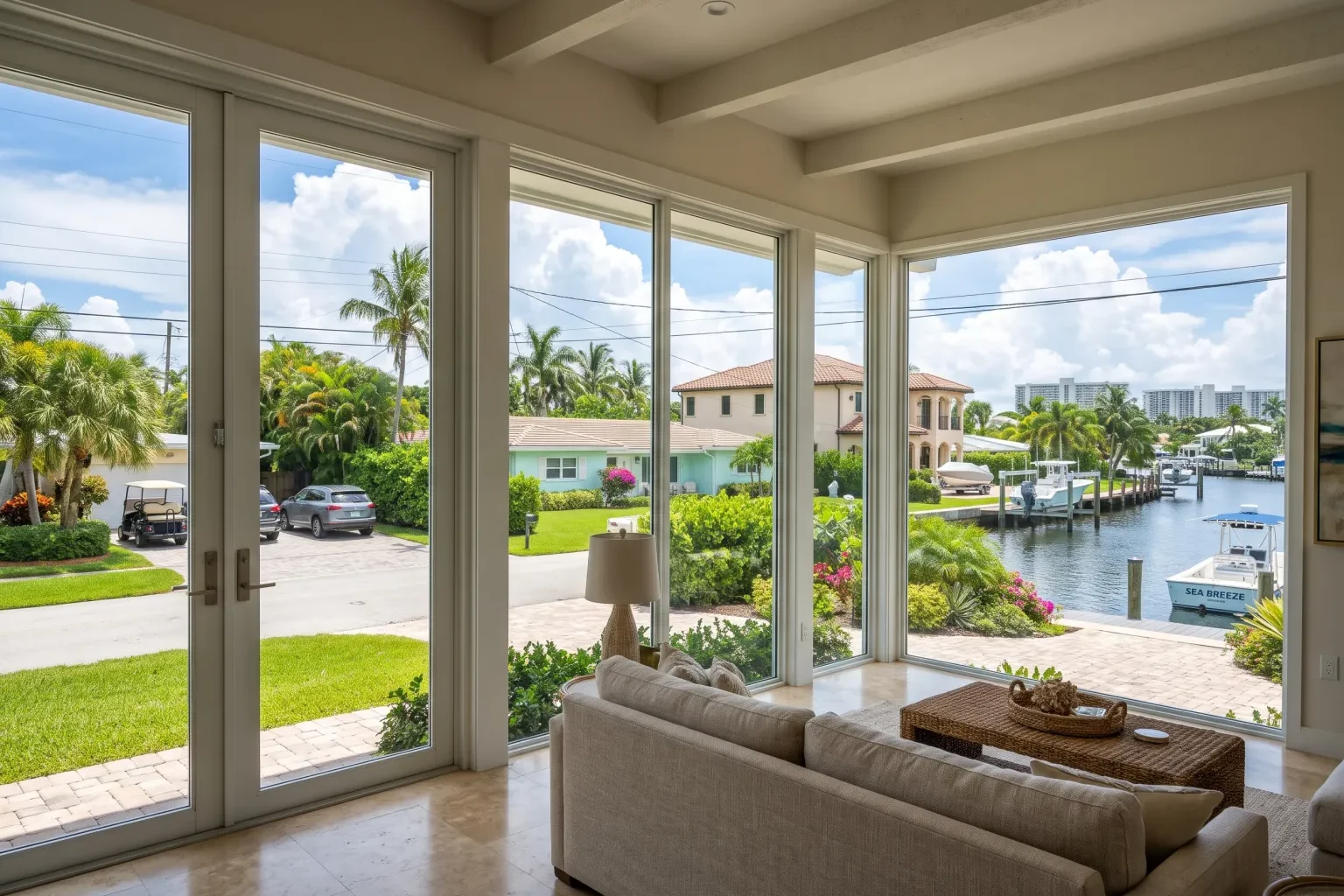
Plant fibers absorb moisture from the air and release it again. In a canal-front home where the sliders open to the patio several times a day, the wall near those doors takes on humid air in bursts, then dries under the AC. Repeated swelling and shrinking can open seams or create faint ripples. We look at which walls see that traffic before recommending where grasscloth belongs.
Interior walls, hallways, a home office or a dining room with a closed door tend to hold steady conditions. Those are the spaces where grasscloth ages gracefully. For a wall next to a pool bath or a frequently opened slider, we often suggest a vinyl product printed to resemble grasscloth, which gives a similar look without the moisture sensitivity.
Sorting rolls before the first panel
Because each roll is woven and dyed in small runs, two rolls from the same batch can still differ in tone. Before cutting, we unroll a section of every roll in the room and line them up in daylight. The closest matches go side by side on the main wall; any roll that reads slightly lighter or darker is saved for areas behind furniture, above doors or inside closets.
Many grasscloth makers also recommend reversing every other panel, turning it top to bottom, so the shading at each edge meets a similar shade on the next strip. We follow the manufacturer's instructions for each product, since not every line is meant to be reversed.
- Check that every roll carries the same batch or lot number
- Order enough for the room plus a spare roll for future repairs
- Plan the seams away from the first sightline into the room
- Keep panel order numbered so the sequence stays consistent
Surface work that the weave will not hide
People sometimes assume a thick natural texture will cover flaws. In practice, raking light from big windows shows dips and ridges right through the fibers. We fill and sand any patching, skim heavy texture flat, then seal the wall with a primer designed for wallcoverings. On concrete-block homes, we also check the inside of exterior walls for any dampness after summer storms, since moisture behind grasscloth tends to show up as dark blotches.
A light-colored primer is especially important with open-weave products like seagrass, where tiny gaps let the wall color peek through.
Hanging technique that keeps the face clean
Adhesive goes on the backing only, at a controlled thickness, and panels are booked for the time the maker specifies so the paper relaxes before it hits the wall. We smooth with a soft brush or roller instead of a hard plastic tool that could crush the fibers. Seams are butted without overlapping and never wiped with a wet sponge, because water marks on grasscloth do not come out.
Cutting is done with fresh blades at every corner, outlet and window return, which keeps the woven ends from fraying. A typical accent wall takes part of a day; a full room with several windows or built-ins can take longer.
Living with grasscloth day to day
Dust it lightly with a soft brush attachment every few weeks and keep it out of direct spray from cleaning products. Sunlight through west-facing glass can fade natural dyes over time, so sheer shades or UV-filtering film help in bright rooms. Most stains are best handled by replacing a single panel, which is one reason we suggest keeping a spare roll.
We also install grasscloth in nearby Hillsboro Beach, Deerfield Beach, Pompano Beach, Coconut Creek and Lauderdale-by-the-Sea.
More services in Lighthouse Point
- Wallpaper Installation in Lighthouse PointLocal service & repairs
- Wallpaper Removal in Lighthouse PointLocal service & repairs
- Accent Wall Installation in Lighthouse PointLocal service & repairs
- Mural Installation in Lighthouse PointLocal service & repairs